
Homes & Real Estate
Rock Hill, SC Homes & Real Estate Guide
We don't publish listings here. We help you understand the kinds of homes Rock Hill offers and what to ask about each.
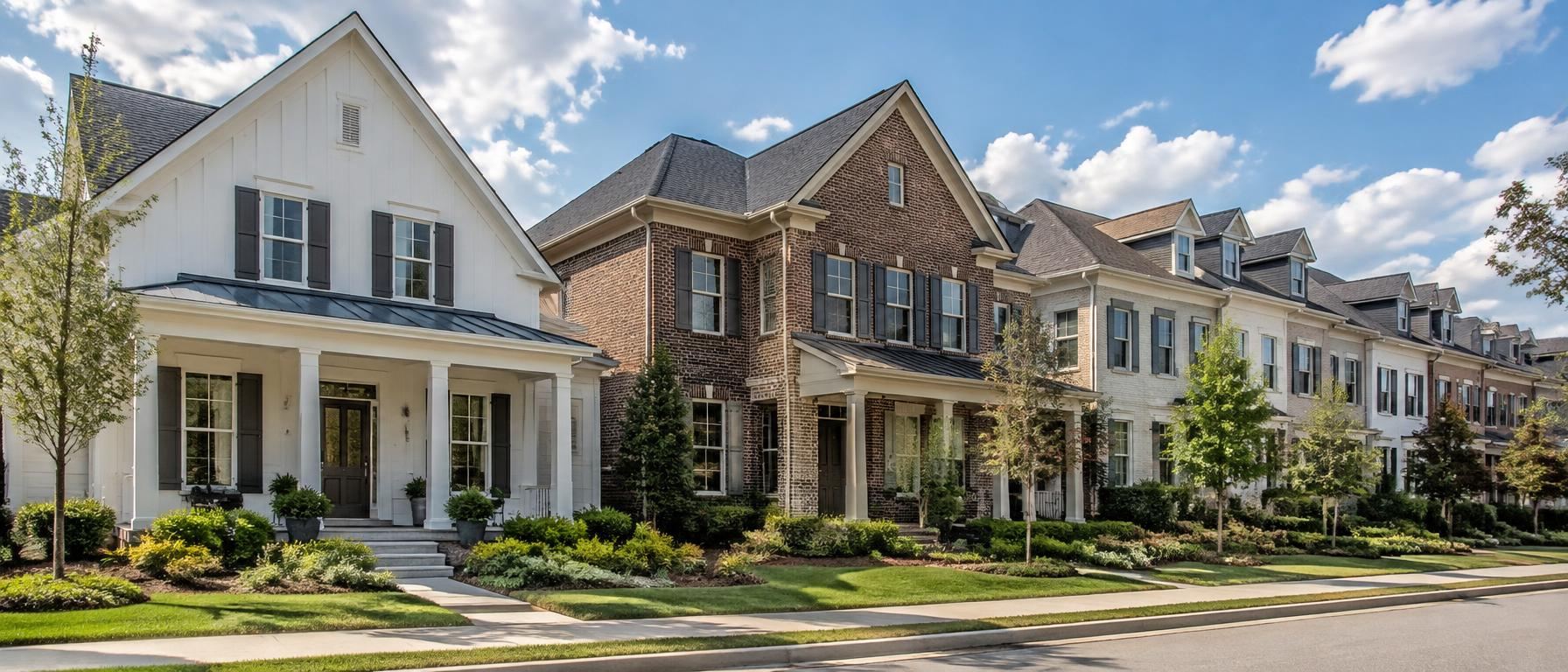
Housing types
- Established homes near Old Town and in older subdivisions.
- New construction in planned communities.
- Townhomes and attached housing.
- Lake-adjacent and waterfront homes, mostly outside city limits.
- Land for custom building.
What Should Buyers Know First?
The right Rock Hill, SC home is the one whose location, jurisdiction, services, rules, and condition still make sense after you verify the address. Start with facts that do not show well in photos: whether the property is inside City of Rock Hill limits, which district serves it, who provides utilities, what an HOA can restrict, and whether the home’s condition matches your plans. After that, compare floor plans, finishes, outdoor space, and style. This order keeps you from falling in love with a property that may not fit your daily life or ownership budget.
Verify City Limits Before Curb Appeal
A Rock Hill mailing address is not the same thing as being inside the incorporated city. That distinction can affect taxes, police response, sanitation, utilities, zoning review, and permitting. Before you compare homes in Rock Hill, SC, confirm the parcel itself rather than relying on the city name in the address. This is especially important when looking near the edges of the city or toward lake-adjacent areas.
- Search the parcel through York County GIS.
- Confirm city-limit status with the City of Rock Hill.
- Ask who provides water, sewer, electricity, trash, and police response.
- Review which zoning code and permitting authority apply.
- Check school assignment by exact property address.
- Read any HOA covenants before planning exterior changes.
Compare Setting, Not Just Floor Plan
Rock Hill settings can feel very different even when the homes have similar square footage. Streets near Old Town may offer older houses, infill, and walkable access to downtown blocks, but they can also bring inspection questions and route-specific walkability issues. Riverwalk combines housing with public recreation along the Catawba River, yet most homes are near the river rather than on it. The Winthrop area has a campus rhythm that may include events, foot traffic, and parking changes. Treat each setting as a separate lifestyle question, not just a search filter.
Questions for Established Homes
Established homes can offer character, mature surroundings, and locations that are difficult to duplicate in newer construction. They also deserve careful review behind the finishes. Older houses may require attention to electrical systems, plumbing, foundations, roofs, insulation, and possible exterior review in locally designated historic areas. If renovation is part of the plan, bring the right professionals into the conversation before assuming walls, windows, siding, or additions can change easily.
- What major systems have been updated?
- Are there signs of foundation, roof, or drainage concerns?
- Would exterior changes need city review?
- What permits would a renovation require?
- Can the layout support your planned use?
- Does the inspection scope match the home’s age?
New Construction and Attached Home Trade-Offs
New construction in planned communities can offer newer systems, warranties, and a more predictable starting point, but it may also come with fewer finished surroundings during buildout and more HOA structure. Townhomes and attached housing can reduce some exterior maintenance decisions while increasing the importance of rules, shared elements, parking, and rental limits. For any newer or attached home, ask what is included, what is private, what is shared, and what approval is required before changes.
- Which HOA or sub-association governs the property?
- What exterior changes require approval?
- What parking, rental, and vehicle rules apply?
- What warranty applies, and who handles requests?
- What can still be changed before completion?
- Can you bring your own inspector?
Waterfront, Lake-Adjacent, and Land Research
Water-related language needs special care. A home can be near Lake Wylie, near the Catawba River, or near a public trail without being waterfront. True waterfront depends on the lot boundary, not listing language or photography. For land, the same discipline applies: a beautiful parcel is only useful if zoning, setbacks, utilities, soils, easements, deed restrictions, drainage, and floodplain conditions support what you want to build. Do not treat shoreline, dock, or buildability claims as settled until documents confirm them.
- Confirm lot boundaries with a survey or plat.
- Check floodplain status before assuming usable land.
- Verify any dock permit and transferability.
- Review shoreline rules before planning changes.
- Confirm water, sewer, or septic suitability.
- Identify easements and deed restrictions early.
Build a Shortlist You Can Defend
A strong home search is narrow for good reasons. For each property, keep a simple research file: jurisdiction, school assignment, utility providers, HOA documents, inspection priorities, commute notes, and any renovation or build questions. Visit at the times you would actually live the routine, not only during an open house. If the home still fits after that review, the decision becomes clearer. If it fails on services, rules, condition, or location, move on before emotion overrides the facts.
Our network
Your Next Chapter
When you're ready to look at actual homes, both of our real estate teams can help you buy or sell.
These websites are affiliated with Rock Hill Living. See the full network or find the right team for your project.