
Homes
Established Home or New Construction?
Mature trees and location, or warranties and open plans?
Published September 28, 2026
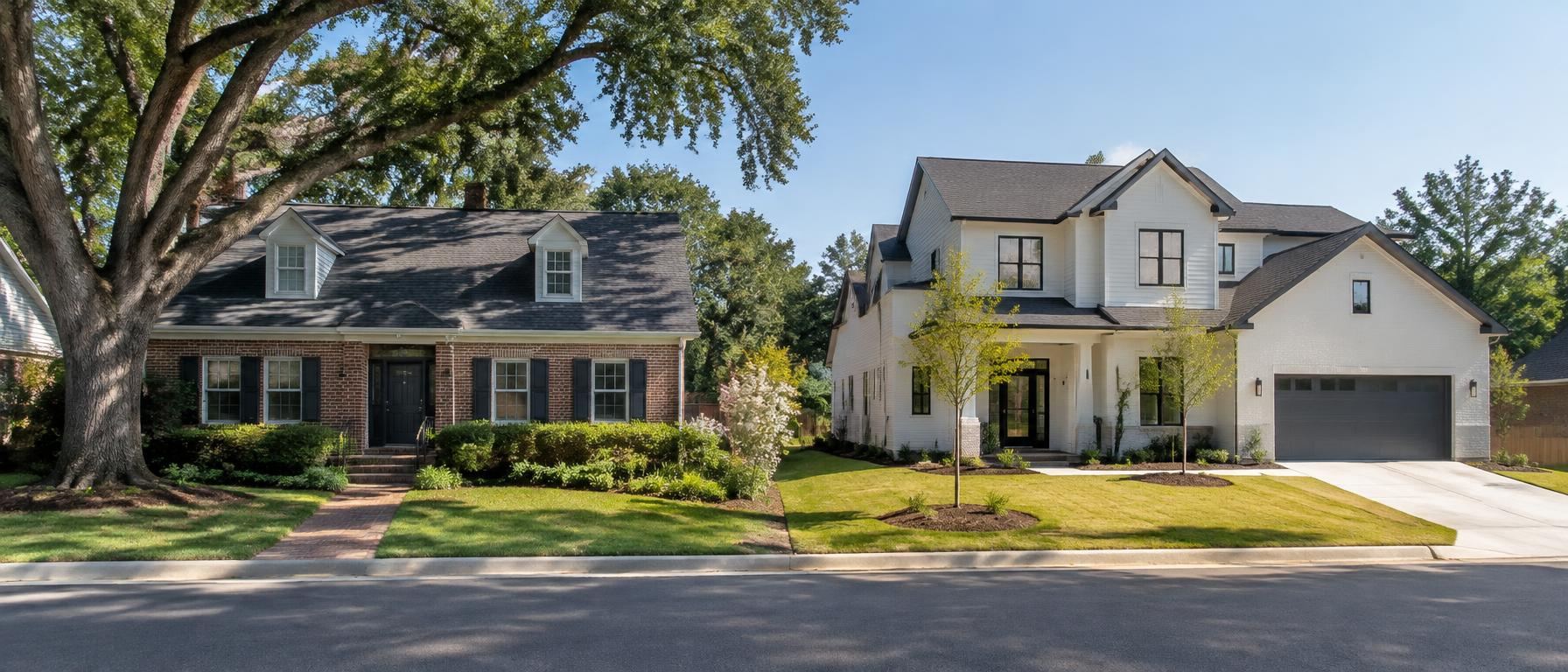
The real trade
Older homes often have better locations and more character, with more maintenance. Newer homes offer efficiency and warranties, often farther out.
Rock Hill, SC: Which Choice Fits Best?
The best choice is the home whose trade-offs you can live with every day: established homes usually win on setting, character, and settled surroundings, while new construction usually wins on simpler early maintenance, modern layouts, and warranty coverage. Neither is automatically better in Rock Hill, SC because jurisdiction, HOA rules, utilities, school assignment, and commute patterns can change by address.
Treat the question less like old versus new and more like certainty versus potential. A newer home may reduce some repair surprises, but it can come with covenants and fewer design choices once built. An established home may offer mature landscaping and a location you prefer, but the inspection has to be taken seriously.
Start with the Address, Not the Style
Before comparing finishes, confirm what government and service systems apply to the property. A Rock Hill mailing address can be inside City of Rock Hill limits or in unincorporated York County, and that affects taxes, zoning, police, sanitation, permitting, and utilities. This matters for established homes and new construction alike.
A local real estate agent can help organize the research, but buyers should still verify the basics through official sources. Ask the same questions for every property so the comparison stays fair.
- Is the property inside City of Rock Hill limits?
- Which school district and assigned schools apply?
- Who provides water, sewer, electricity, and trash service?
- Which zoning and permitting authority applies?
- Is there an HOA or architectural review process?
- Are recent utility bills available from the seller?
How Established Homes Should Be Evaluated
Established homes in Rock Hill, SC deserve a slower look behind the visible charm. Trim, floors, proportions, and mature outdoor spaces may be hard to recreate in newer construction, but systems drive ownership cost. Electrical, plumbing, foundation, roof, insulation, and HVAC questions should come before paint colors or furniture plans.
If the home is near older streets, downtown blocks, or a university setting, visit at the times you would actually live there. Walk the route you expect to use, notice traffic and parking patterns, and ask whether exterior changes could require review. Renovation potential is valuable only when the structure, rules, and budget support it.
- Ask what major systems have been updated.
- Review inspection findings before planning cosmetic work.
- Check for permit needs before additions or exterior changes.
- Confirm whether historic-area review could apply.
- Look for drainage, grading, and foundation concerns.
- Separate required repairs from optional improvements.
How New Construction Should Be Evaluated
New construction can simplify early ownership, but it should still be researched carefully. Ask what is included, what can still be changed, what warranty applies, and which inspections are part of the process. A finished spec home offers less decision fatigue, while a home earlier in construction may allow more selections.
Do not assume every newer community works the same way. Phasing can create differences in builders, lot sizes, home ages, and HOA coverage. Read covenants before committing, especially if you care about fences, sheds, pools, outdoor kitchens, exterior materials, vehicles, trailers, boats, rentals, or future additions.
Layout, Light, and Daily Function
Older and newer homes often solve space differently. Established homes may have smaller rooms, defined entries, existing trim, and window placement that guides furniture choices. Newer homes often emphasize open plans, which can feel easy for gathering but may need careful lighting, texture, and furniture scale to feel warm.
Walk through with daily routines in mind. Where do bags land? Where does work happen? Can guests park without disrupting neighbors? Is there enough storage for outdoor gear, tools, or seasonal items? An interior designer can help compare layout potential before a buyer overvalues a pretty finish or undervalues a workable floor plan.
Budget Beyond the Purchase Price
A fair comparison includes the costs that appear after closing. For an established home, that may mean repairs, renovation planning, utility use, and upgrades hidden behind walls. For new construction, that may mean window treatments, landscaping, storage, technology, outdoor living, HOA dues, or upgrades not included in the base finish package.
South Carolina ownership costs also depend on property classification, city or county millage, vehicle taxes, insurance, utilities, and HOA dues. Compare the full household budget, not just the mortgage estimate. If you are planning major work, speak with a renovation builder or home technology integrator before assuming changes will be simple later.
A Decision Process That Keeps You Honest
Use the same research sequence for every contender. First, confirm jurisdiction and services. Then compare school assignment, HOA rules, commute, inspection findings, and renovation or selection flexibility. Only after that should finishes, colors, and staging carry much weight.
The right Rock Hill, SC home is the one where the unknowns are acceptable. If you love an established location, price the maintenance and renovation path clearly. If you prefer new construction, read the covenants and warranty details closely. Either way, make the decision from documents, inspections, and lived routines rather than listing language.
- Verify jurisdiction before comparing taxes and services.
- Read HOA documents before making an offer.
- Drive the commute at your real departure time.
- Review inspection and warranty details in writing.
- Price near-term repairs or upgrades realistically.
- Revisit the property with daily routines in mind.
Our network
Your Next Chapter
Whichever way you lean, there's a partner for it.
These websites are affiliated with Rock Hill Living. See the full network or find the right team for your project.