
Lake Wylie
Lake Wylie Living Near Rock Hill, SC
A reservoir on the Catawba River shared by two states and several jurisdictions — research carefully.
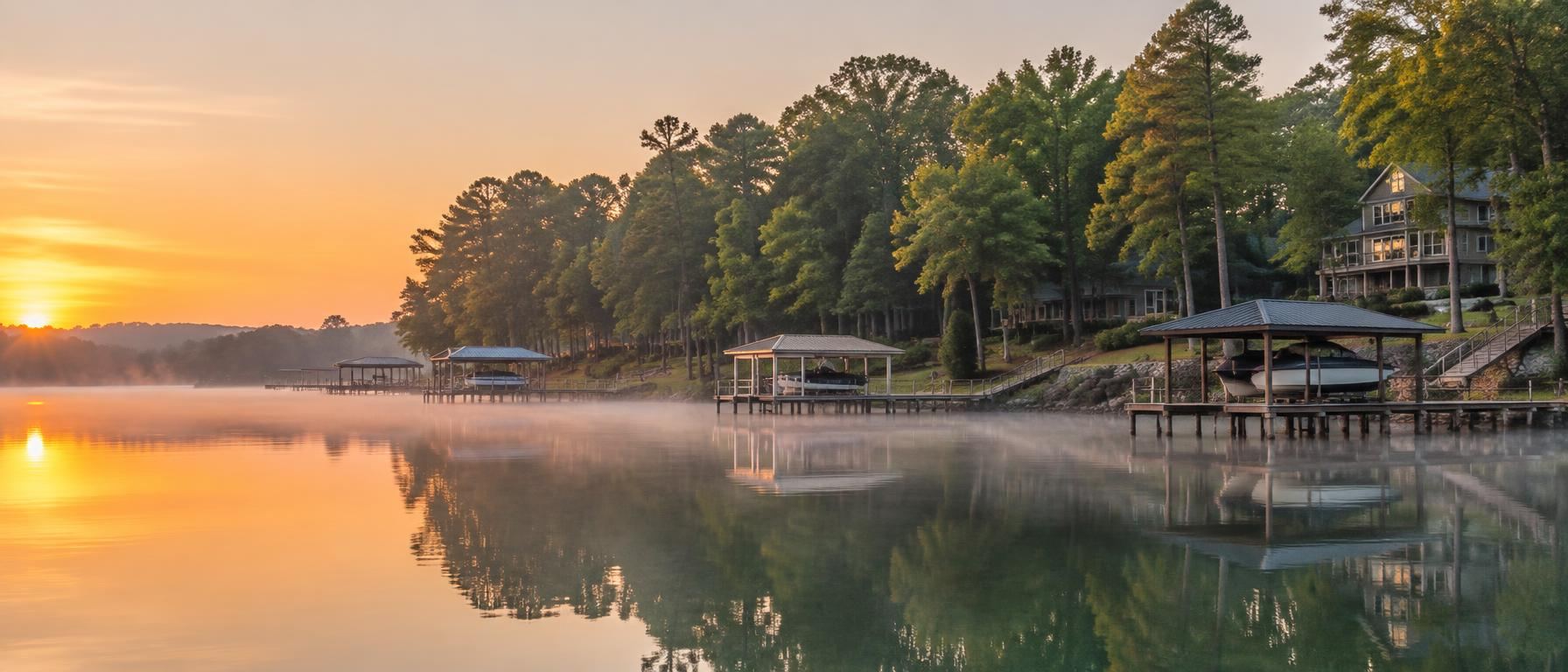
Where the lake sits
Lake Wylie straddles the North Carolina–South Carolina line north of Rock Hill. Shoreline on the South Carolina side falls in York County, and much of it is outside Rock Hill city limits. Some homes with Rock Hill mailing addresses are near the lake; that does not make them waterfront, and it does not make them city residents.
Is Lake Wylie in Rock Hill, SC?
Lake Wylie is near Rock Hill, SC, but a lake setting and a Rock Hill mailing address do not answer the jurisdiction question. The quotable rule is simple: Lake Wylie proximity is not the same as Rock Hill city residency, and waterfront language should be verified parcel by parcel.
For buyers, visitors, and anyone comparing water settings, start with maps and documents rather than assumptions. The lake, the city, York County, and private communities can all matter in different ways. A property can feel lake-oriented while still being governed, served, taxed, and restricted by rules that are not obvious from the address line.
How to Research a Lake-Oriented Address
Treat each address near Lake Wylie as its own due-diligence project. Begin with jurisdiction, then move to schools, utilities, HOA documents, lot boundaries, and shoreline permissions. This order keeps you from falling in love with a view before you understand who controls services, permits, and exterior changes.
A local real estate agent can help organize the document chase, but the answers should still come from official records, seller disclosures, surveys, plats, HOA documents, and direct confirmation from the applicable authority. Marketing copy is useful for discovery; it is not proof.
- Confirm whether the parcel is inside City of Rock Hill limits.
- Verify school assignment using the exact property address.
- Identify water, sewer, electricity, and trash providers.
- Request current HOA covenants and architectural rules.
- Review the survey or plat for actual shoreline contact.
- Ask whether floodplain or easements affect usable land.
Public Access Versus Private Shoreline
Lake research often gets confusing because people use the same words for very different rights. Public parks and trails follow posted public rules. Residential amenity centers, pools, private docks, and community docks are usually controlled by owners, associations, or shoreline approvals. Seeing water nearby does not mean the public can use it.
If your goal is recreation, research access separately from housing. If your goal is homeownership, research the deeded lot, any common areas, the HOA, and shoreline documents separately from public access. A home may be close to the lake without a private dock, and a community feature may be shared rather than attached to a specific lot.
Waterfront Claims to Verify Before You Rely on Them
“Waterfront” should describe a legal and physical condition, not a mood created by listing photos. For Lake Wylie near Rock Hill, SC, the key question is whether the lot actually reaches the shoreline and whether the owner has usable rights there. Common area, utility land, buffers, easements, or association property can change what a buyer can do.
Ask for documents early. A survey, plat, dock permit information, and HOA rules can reveal whether a shoreline claim is meaningful. If a dock appears in photos, confirm whether it is permitted, whether it transfers, whether it is shared, and whether changes would need additional approval.
- Does the recorded lot boundary touch the shoreline?
- Is any land between the home and water common area?
- Are dock permits available for review?
- Would dock changes require new approval?
- Do HOA rules limit boats, fences, or exterior work?
- Does water depth change enough to affect use?
Docks, Shoreline Rules, and Owner Expectations
Docks on Lake Wylie are not just home features; they sit within a shoreline management framework. Before assuming a dock can be repaired, expanded, replaced, or added, confirm the applicable rules and the existing permit status. The same caution applies to shoreline work, erosion concerns, and improvements near the bank.
A dock can also be a maintenance responsibility. Buyers should ask about condition, access, shared use, and any association oversight. A renovation builder or other qualified professional may help evaluate structure and repair scope, but permission questions should be answered before design or construction expectations are set.
Comparing Lake Wylie with Riverwalk
Lake Wylie and Riverwalk are both water-related, but they are not the same setting. Riverwalk is tied to the Catawba River, public recreation, trails, and a planned community context. Lake Wylie is a reservoir setting where shoreline, dock rules, and jurisdiction questions can be central to the decision.
This distinction matters when comparing lifestyle. A buyer who wants trail access may evaluate Riverwalk differently from someone focused on a dock, lake views, or a lot that touches water. Do not use photos, names, or casual descriptions interchangeably. Confirm whether you are researching moving water, a reservoir shoreline, public recreation, or private residential rights.
Questions to Ask Before You Visit or Buy
Good Lake Wylie research starts before a showing or weekend drive. Decide whether your priority is a lake view, actual shoreline ownership, boating access, lower maintenance, public recreation, or a specific jurisdiction. Each priority leads to different documents and trade-offs.
For a purchase, read HOA documents before making assumptions about outdoor living. For a visit, confirm access rules before planning around any facility. For a move, compare total ownership costs, utilities, taxes, schools, and commute needs by exact address, not by the words “Rock Hill” or “Lake Wylie” alone.
- What does the buyer actually need: view, dock, access, or ownership?
- Which jurisdiction reviews permits for the property?
- Who maintains any shared dock or shoreline feature?
- Are boats, trailers, and exterior changes restricted?
- What services and utilities apply to this address?
- Has the commute been tested at real travel times?
Our network
Your Next Chapter
Waterfront homes deserve representation that understands shoreline permits as well as square footage.
These websites are affiliated with Rock Hill Living. See the full network or find the right team for your project.