
Waterfront
Buying a Lake Wylie Home With a Dock
Ask for the permit before you ask about the boat lift.
Published September 26, 2026
Verify
Confirm the dock permit, shoreline rules, seasonal water depth, and condition. Have the structure inspected.
Should You Buy a Lake Wylie Home with a Dock?
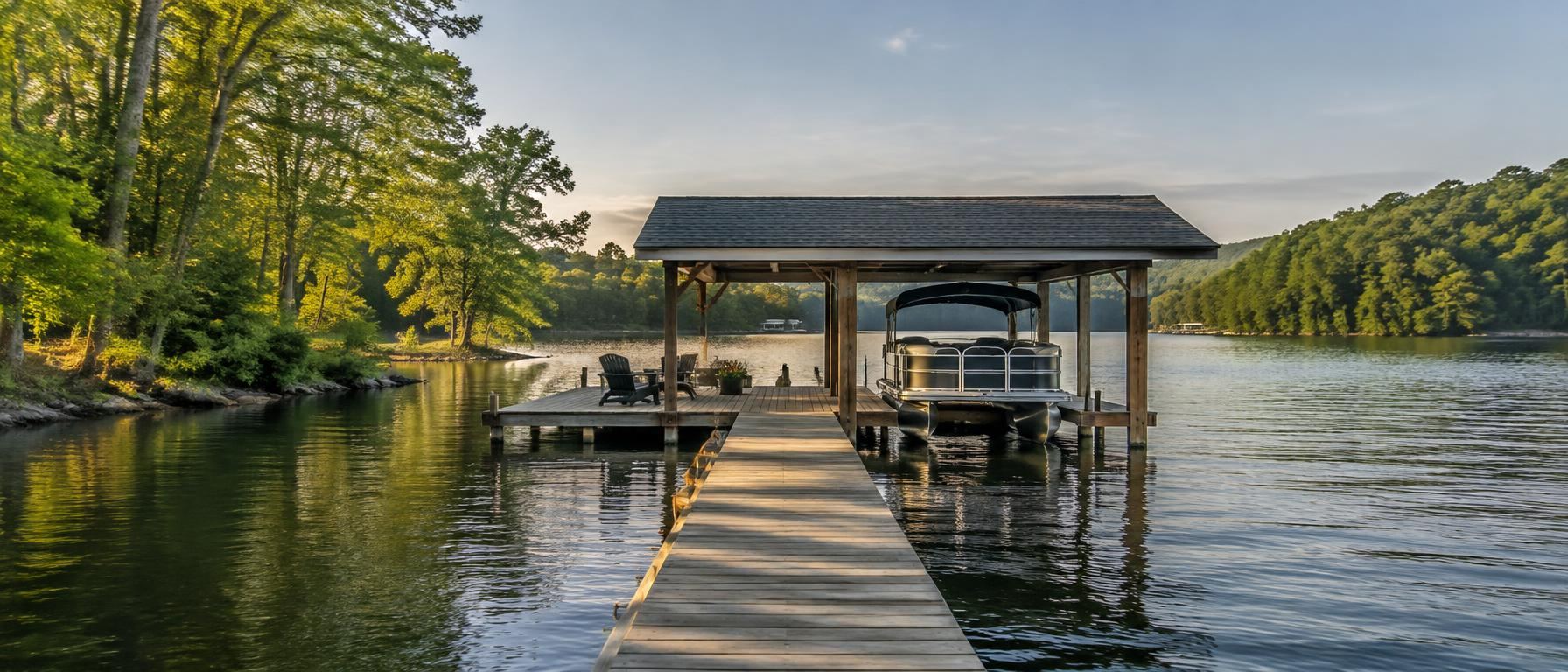
Buy a Lake Wylie home with a dock only after the dock is treated as its own asset: permitted, transferable, structurally sound, usable at the water levels you expect, and allowed under shoreline and HOA rules. The house may be attractive, but the dock can carry separate risk. Listing photos show presence, not permission. Before you price the property, ask whether the dock is legal, usable, insurable, maintainable, and aligned with how you plan to use the shoreline.
Start with the Exact Property Boundary
Waterfront should be proven, not assumed. For any Lake Wylie home with a dock, compare the survey, plat, and county parcel information against what the listing claims. A lot may touch the shoreline, stop short of it, or be separated from the water by common area, utility land, or another restriction. That distinction affects control, maintenance, and what an owner can change later.
- Request the most recent survey or plat.
- Confirm where the lot meets the shoreline.
- Look for easements near the water.
- Ask if any common area separates the lot.
- Compare marketing language with recorded documents.
Check Address Status Before Dock Details
Some homes near Lake Wylie have Rock Hill mailing addresses, but that does not mean they are inside City of Rock Hill limits. Much of the South Carolina shoreline is in York County, and services, taxes, zoning review, and utility providers can vary by exact parcel. Before getting deep into dock conversations, confirm the jurisdiction that governs the house and the land.
This matters because a waterfront purchase is rarely just a house purchase. You may be evaluating city or county rules, HOA covenants, shoreline rules, utilities, flood zone status, and insurance at the same time. A local real estate agent can help organize the questions, but official sources and property documents should drive the answer.
Documents to Request Before You Offer
A clean Lake Wylie home with a dock file should answer the basic questions without relying on memory. Ask for documents early enough that you can read them calmly, compare them against the property, and decide whether your offer needs contingencies. If the seller cannot provide a permit, approval letter, survey, or HOA materials, that does not automatically end the conversation, but it changes the level of risk.
- Dock permit and related approval records.
- Survey, plat, and shoreline references.
- HOA covenants and architectural rules.
- Recent dock repair or maintenance records.
- Flood zone and insurance information.
- Utility provider details for the address.
Inspect the Dock Like a Structure
A dock is exposed to weather, water movement, and regular use, so visual appeal is not enough. Have the structure inspected by someone who understands outdoor construction and can evaluate framing, decking, connections, flotation or support elements, access points, and signs of deterioration. The goal is not merely to find defects; it is to understand whether the dock is safe, serviceable, and consistent with the permit.
Also ask what maintenance would be required if you owned it. A dock that is currently usable may still need near-term repairs, and repairs may require approval depending on shoreline rules and the scope of work. Separate cosmetic updates from structural concerns, and do not assume a boat lift, seating area, or utility connection can be changed without review.
- Condition of decking and framing.
- Stability at the shoreline connection.
- Visible wear, movement, or deterioration.
- Safe access from house to dock.
- Evidence of unapproved additions.
- Repair scope and approval needs.
Test Water Use, Not Just Water Views
A Lake Wylie view and practical dock use are different things. Ask how water depth changes across seasons, whether the shoreline is usable for your type of boating, and how conditions affect daily access. A buyer who wants quiet sitting space may judge the property differently from a buyer focused on boat access. The right question is not whether the home is waterfront; it is whether the water works for your plans.
Walk the full path from the house to the dock and think through ordinary use. Steps, slope, surface material, lighting, storage, and distance from the main living areas all affect whether the dock becomes part of daily life or a feature you rarely use. If you plan outdoor upgrades, check HOA and permit requirements before assuming they are allowed.
Plan for Future Changes Before Closing
An existing dock does not guarantee that you can expand it, replace it, add features, or rebuild it in the same way later. Shoreline management rules, HOA covenants, floodplain limits, and property boundaries can all shape future options. Before closing, ask what would happen if the dock needed major repairs or if you wanted to modify the shoreline experience.
For larger plans, talk with the appropriate official sources before you buy, not after. A renovation builder, outdoor living specialist, or home technology integrator can help think through lighting, power, speakers, and outdoor spaces, but approvals and site constraints come first. The strongest purchase decision is the one that separates what exists today from what is legally and physically possible tomorrow.
Our network
Your Next Chapter
Lake homes call for experienced representation — and often a technology plan for the dock and patio.
These websites are affiliated with Rock Hill Living. See the full network or find the right team for your project.