
Design
Planning Outdoor Living and Home Technology
Run the conduit before you pour the patio.
Published October 10, 2026
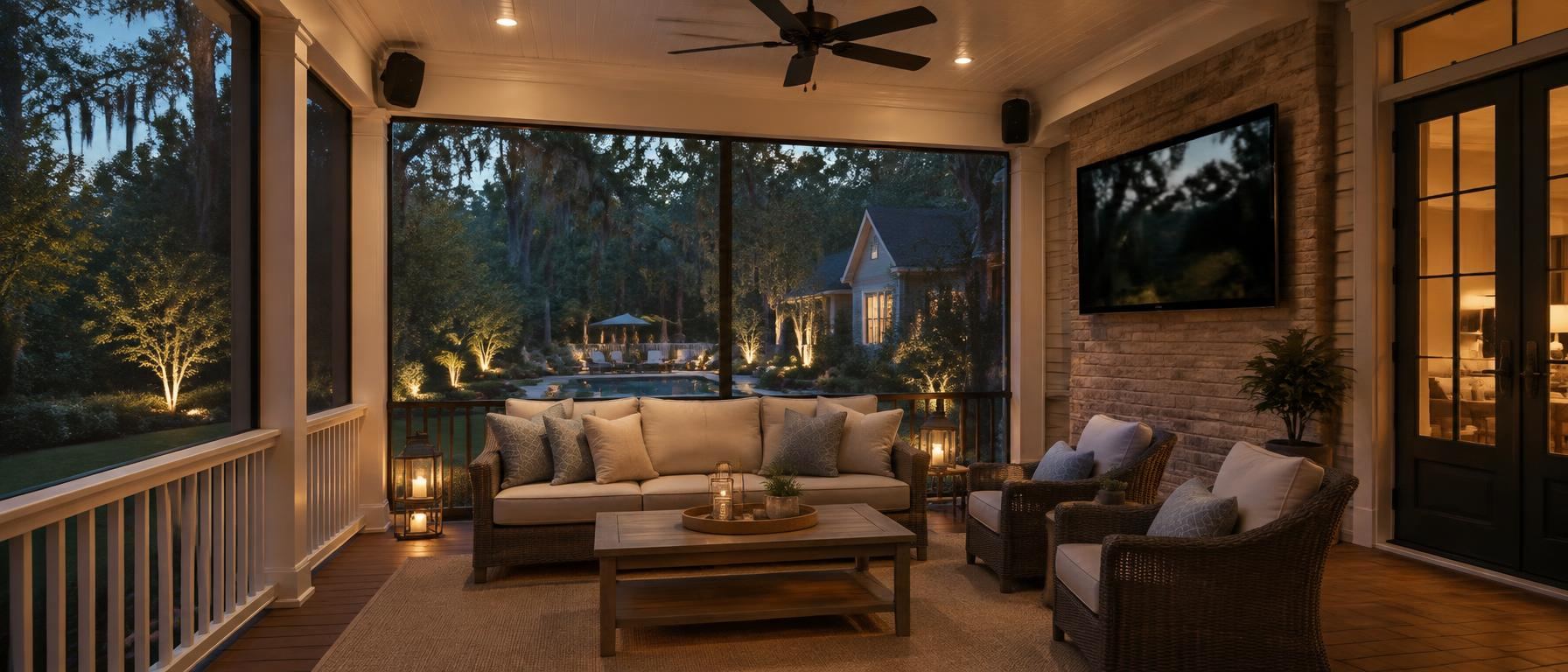
Plan together
Speakers, screens, lighting, and Wi-Fi outdoors are easiest when planned with the structure.
When Should Rock Hill, SC Owners Start Planning?
Plan outdoor living and home technology before the patio, porch, or wall assembly is fixed; the cheapest cable path is the one you never have to reopen. In Rock Hill, SC, that means discussing speakers, screens, lighting, Wi-Fi, and utility needs while the outdoor room is still being designed, not after finishes are selected. A renovation builder, interior designer, and home technology integrator should understand the same layout, the same seating plan, and the same restrictions. Retrofits are possible, but open walls, accessible structure, and early conduit decisions give the project more flexibility.
Map the Outdoor Room Before Choosing Gear
Start with how the outdoor space will be used, then place technology around that plan. A patio meant for quiet meals needs different speaker placement than a gathering space built around a screen. Lighting should support movement, seating, and safety without turning the whole yard into a stage. Wi-Fi planning should follow where people actually sit, work, and stream. The goal is not more equipment; it is a room that works outdoors as comfortably as the indoor rooms nearby.
- Where will people sit during sun, insects, or summer storms?
- Which views should remain open and uncluttered?
- Where could a screen work without dominating the space?
- Where should speakers provide coverage without excess volume?
- Where should lighting guide movement and define seating?
- Where can equipment be protected and still accessible?
Check HOA and Permit Rules Early
Outdoor living projects in Rock Hill, SC can be shaped by more than design preference. HOA covenants may control exterior materials, additions, fences, sheds, pools, outdoor kitchens, colors, and visible equipment. Permit review also depends on the correct jurisdiction. A Rock Hill mailing address may be inside City of Rock Hill limits or in unincorporated York County, and that difference can change zoning review and service providers.
Before ordering materials, ask who approves the work, what documents are required, and whether architectural review is separate from permitting. Keep written approvals with the project file. If a home is near older streets or locally designated historic areas, exterior changes may need additional review before windows, siding, additions, or visible technology locations are finalized.
Plan the Invisible Paths
The best outdoor technology planning is mostly invisible when the project is finished. Conduit, wiring routes, equipment locations, and access points should be drawn before the patio is poured and before drywall is closed. This is especially important when an outdoor room is attached to a renovation or custom home project, because interior and exterior decisions affect each other. A screen location may change a wall plan; speaker locations may change trim or ceiling details; Wi-Fi coverage may depend on where equipment can be placed.
- Conduit from the house to the outdoor room
- Speaker, screen, lighting, and Wi-Fi locations
- Interior equipment location before drywall closes
- Access points that do not spoil finishes
- Routes that avoid future demolition where possible
- Space for future changes if needs evolve
Balance Comfort, Shade, and Technology
Outdoor rooms in Rock Hill, SC have to respond to long warm seasons, shade, insects, and summer storms. Technology should support those realities instead of fighting them. A bright seating area may not be the right place for a screen. A dining area may need subtle lighting more than visible fixtures. A covered space may feel finished, but it still needs practical planning for where people gather, how sound travels, and how the room connects back to the house.
Ask design partners to evaluate comfort before equipment. Where will shade be most useful? Where will people move when weather changes? What should remain simple and quiet? These questions keep the project from becoming a collection of devices rather than a usable outdoor room.
Build a Research File for Each Address
Because services, rules, and jurisdiction vary by address, keep a property-specific research file before committing to major outdoor living and home technology work. This is useful whether the home is an established property, a newer build, a renovation candidate, or a custom home site. The file should help every partner work from the same assumptions and should reduce late surprises about approvals, utilities, drainage, easements, or HOA restrictions.
- City of Rock Hill or unincorporated York County status
- Utility providers and recent bills, when available
- HOA covenants and architectural approval process
- Permit authority for the planned work
- Existing electrical systems and outdoor equipment condition
- Survey, easements, drainage, and floodplain questions
Our network
Your Next Chapter
For the technology side of the home, visit Peters Audio Video.
These websites are affiliated with Rock Hill Living. See the full network or find the right team for your project.