
Interior Design
Interior Design for Rock Hill, SC Homes
Older homes ask you to respect their bones. Newer homes ask you to give them character.
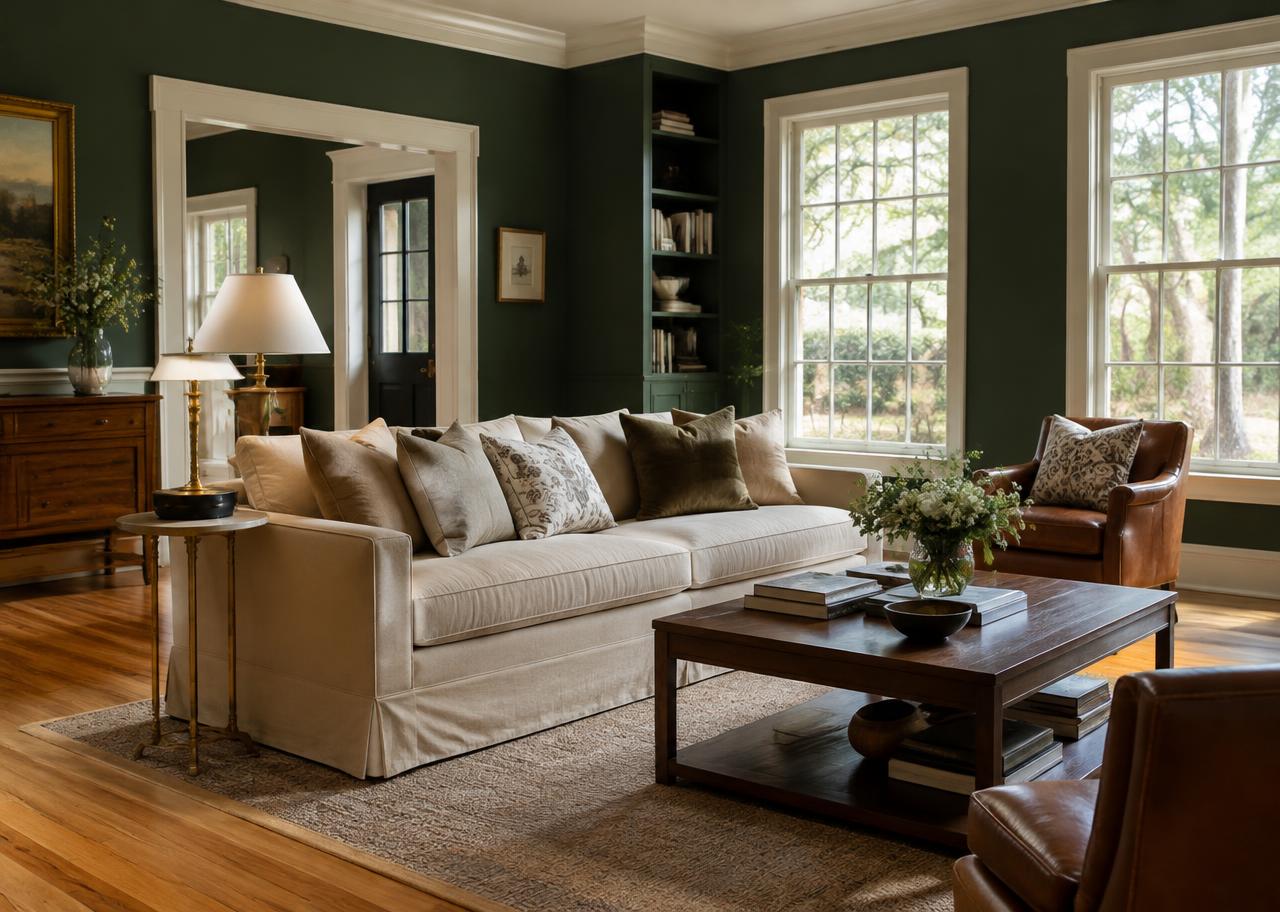
Two starting points
In established homes, design often works with existing trim, floors, and window placement. In new construction, the challenge is warmth: texture, layered lighting, and furniture scaled to open plans.
How Should You Start Interior Design in Rock Hill, SC?
Start by deciding what the house is already telling you. The best Rock Hill, SC interior design plan does not force an older home to look new or leave a newer home feeling unfinished. It identifies the strongest existing features, fixes awkward daily-use problems, and then builds a consistent plan for color, lighting, furniture scale, storage, and materials. A local interior designer can help translate taste into decisions that work with the home, the budget, and any construction limits.
What Should Stay in an Established Home?
Established homes can reward restraint. Before replacing anything, look at what gives the rooms proportion: trim depth, ceiling transitions, window placement, stair details, floors, and built-ins. Those elements may not match current trends, but they often explain why a room feels balanced. Removing them can make the home feel plainer, even after expensive updates.
The useful question is not whether an item is old. The useful question is whether it supports the room. A worn floor may still give warmth. A dated fixture may need replacement. A narrow doorway may be part of the original rhythm, or it may block daily life. Separate character from inconvenience before choosing a direction.
- Photograph each room before choosing finishes.
- Identify original or long-standing architectural details.
- Check whether floors can be repaired before replacing them.
- Notice how window placement affects furniture layout.
- Separate cosmetic wear from structural or system concerns.
- Ask about review needs before exterior changes.
How Newer Homes Gain Warmth and Character
Newer homes often need editing as much as decorating. Open spaces can feel large but undefined, especially when the same wall color, flooring, and ceiling treatment run through several areas. The goal is to create zones without making the plan feel chopped up. Rugs, lighting, furniture groupings, wall texture, and art placement can help a broad space feel intentional.
Character should be planned, not sprinkled on at the end. Repeating a few materials across the home usually feels calmer than introducing a new idea in every room. A designer can help decide where to invest in permanent features and where flexible pieces are enough.
- Define seating areas before buying rugs.
- Use lighting to separate dining, reading, and gathering zones.
- Choose furniture depth for the room, not the showroom.
- Repeat finishes in nearby spaces for continuity.
- Add texture where architecture is simple.
- Plan storage so open rooms stay uncluttered.
Why Light and Scale Matter More Than Style Labels
Style labels can be helpful shorthand, but they rarely solve a room. Light and scale do more of the work. A color that looks calm in a bright room may feel flat in a shaded room. A sofa that seems comfortable by itself may block circulation once paired with chairs, tables, and lamps. Good design starts with how the room behaves across normal use.
In Rock Hill homes, the light can vary sharply by room because of window placement, porch cover, tree cover, and neighboring structures. Test finishes in the actual room before committing. Look at paint, fabric, and wood tones near the floor, near the windows, and under evening lighting so the palette holds together beyond a single impression.
When Design Overlaps with Renovation or Permits
Interior design can stay purely decorative, but it often touches renovation. Moving walls, changing electrical plans, altering plumbing, adding built-ins, and changing exterior features can involve builders, trades, inspections, HOA review, or the correct permitting authority. A Rock Hill mailing address does not automatically mean a property is inside City of Rock Hill limits, so jurisdiction should be confirmed before work begins.
This matters even for design-driven projects. A lighting plan may depend on wiring. A kitchen layout may depend on plumbing. A window decision may raise review questions in locally designated historic areas. Bring the right professionals into the conversation before ordering materials that assume approvals are simple.
- Confirm whether the property is in city limits.
- Read HOA covenants before exterior or visible changes.
- Ask whether electrical or plumbing work needs permits.
- Check historic-area review before replacing windows or siding.
- Plan technology needs while walls are open.
- Coordinate design drawings with builder questions early.
How to Work with a Local Interior Designer
A productive designer relationship starts with decisions, not inspiration overload. Bring photos of the home, a list of rooms that frustrate you, and a clear sense of how the household uses each space. Instead of asking for a single look, ask for a plan that explains priorities: what to keep, what to change, what can wait, and what should be coordinated with construction.
Ask how the designer handles purchasing, builder communication, finish selections, and installation. Clarify how choices will be documented so a renovation builder, home technology integrator, or other professional can work from the same plan. The best process reduces second-guessing and prevents attractive individual choices from fighting each other.
- Share photos of rooms in natural and evening light.
- Describe daily routines before discussing colors.
- Set priorities for must-fix spaces and flexible spaces.
- Ask how selections will be documented.
- Clarify who coordinates with trades.
- Request a phased plan if work will happen gradually.
Rock Hill, SC Interior Design Research Order
For buyers, design research should begin before closing if the home needs meaningful changes. Walk the property with design questions in mind: where furniture will go, where lighting feels weak, where storage is missing, and which finishes are worth preserving. For sellers, the same review can help separate presentation updates from larger projects that may not be worth starting.
Use official and property-specific sources for anything beyond decoration. Confirm jurisdiction, utilities, HOA restrictions, and any review requirements before assuming a project is straightforward. Then focus the design plan on what will make the home easier to live in: comfortable rooms, durable materials, thoughtful light, and a clear relationship between older character and newer convenience.
Our network
Your Next Chapter
Bring the conversation from architecture to interiors with Emerald Oak Design.
These websites are affiliated with Rock Hill Living. See the full network or find the right team for your project.